topads

Friday, July 29, 2011

2011 Toyota Avalon Review

2011 Toyota Avalon Review | On the way to conquering the universe, Toyota put a pill right down Buick’s stack. The languid Avalon, essentially a punched-out Camry with Lexus trappings, may not fascinate the street pilots who devour this magazine, but about 40,000 people are expected to lay down their greenbacks for one this year, and Toyota has a few minor changes to announce. The fenders are new for 2011, raising the rear decklid for better aerodynamics and creating a more windswept face with a new grille at the center.


A revised dash cages the instruments in separate, attractive binna­cles, and a large shingle of loss-luster plastic resembling brushed pewter contains the navigation system with its revamped con­trols. On the Limited, chrome slivers on the door handles and lower doors add a blaze of old-fashioned brightwork. There are just two versions: the base Avalon and the Avalon Limited, tested here and now coming with standard leather and a sunroof. Otherwise, Toyota’s Arthurian super-Camry remains unchanged down to its six-speed automatic and 268-hp, 3.5-liter V-6, which delivers 60 mph in 6.6 seconds. 

That’s 0.3 second slower than our previous Avalon test car, but punch the gas in traffic, and the Avalon moves out. That’s all most Avalon drivers care about. Expressway travel is a quiet, efficient affair, though the brakes have an abrupt light-switch feel and the steering is slow and somewhat lifeless in the middle, so you’re just a bit more active correcting the Avalon’s path as it’s disturbed by crosswinds and pavement changes. Perhaps the owner clin­ics reveal that Avalon buyers like to be reminded of their first high-school cars. 
The Avalon isn’t much larger than the Camry—there’s an extra 1.7 inches at the wheelbase, 8.4 inches overall, and just over an inch more in width—but it feels roomier, especially in the back, and remains a Lexus in everything but its grille badge. Here, then, is a car for those who fondly remember the Buicks of yore. 

Specifications


VEHICLE TYPE: front-engine, front-wheel drive, 5-passenger, 4-door sedan
PRICE AS TESTED: $37,884 (base price: $32,995)
ENGINE TYPE: DOHC 24-valve V-6, aluminum block and heads, port fuel injection
Displacement: 211 cu in, 3456 cc
Power (SAE net): 268 bhp @ 6200 rpm
Torque (SAE net): 248 lb-ft @ 4700 rpm
TRANSMISSION: 6-speed automatic with manumatic shifting
DIMENSIONS:
Wheelbase: 111.0 in Length: 197.6 in
Width: 72.8 in Height: 58.5 in
Curb weight: 3495 lb
C/D TEST RESULTS: 
Zero to 60 mph: 6.6 sec
Zero to 100 mph: 16.6 sec
Street start, 5–60 mph: 6.8 sec
Standing ¼-mile: 15.0 sec @ 95 mph
Top speed (governor limited, mfr's claim): 135 mph
Braking, 70–0 mph: 180 ft
Roadholding, 300-ft-dia skidpad: 0.81 g
FUEL ECONOMY:
EPA city/highway driving: 20/29 mpg

C/D observed: 22 mpg

Do ou want to try 2011 Toyota Avalon??

BMW i3 Concept

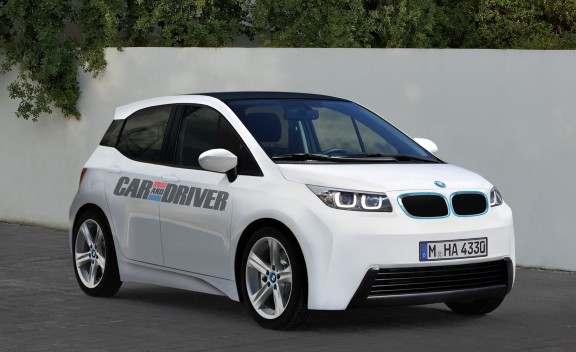
BMW i3 Concept | BMW has been hyping up its “Megacity Vehicle” for a couple of years now, and despite teasers about innovative tech features and full carbon-fiber body structures, we’ve withheld judgment, even when we spied one in the wild over the winter. But as of now, the shroud of mystery has been lifted about all the details except how the thing actually drives. Like a BMW? Like nothing before it? Maybe both?


BMW i3 Concept, The i3’s story begins with its LifeDrive architecture. According to BMW, experience with the Mini E and BMW ActiveE (the electric 1-series coupe) has proven that creating an electric car out of a structure designed to house an internal-combustion engine results in wasteful excess weight and imperfect packaging. As a result, the i3 (as well as the i8 sports car also being announced now) is made up of two separate modules. 

BMW i3 Concept, The “Drive” portion houses a large array of lithium-ion batteries, plus the suspension, transmission, and electric motor. For a low center of gravity, all of these heavy components are low to the ground, with the batteries spread within the wheelbase for optimal handling. The main structure is all aluminum, with an additional aluminum barrier around the batteries for crashworthiness. The “Life” module sits atop the drive components and houses passengers and luggage. As BMW has already announced, this structure consists of carbon-fiber reinforced plastic, or CFRP, a first for any vehicle this side of a few exotic supercars. While the aluminum Drive module weighs 30 percent less than a similar steel structure, the weight reduction in the CFRP Life module is closer to 50 percent. As a whole, the i3 weighs in at 2756 pounds, according to BMW

When speaking about the safety of CFRP, the company points to Formula 1 cockpits as proof of security. While metals require large crumple zones, carbon can be designed with special deformation elements that result in large amounts of energy being consumed in a very small space. A further benefit of the LifeDrive architecture is the deletion of a driveshaft tunnel, allowing more space to be dedicated to the cabin. BMW says each set of seats (front and rear) is connected so that every passenger can leave from one side in a tight parking space, but we think someone at the company just really digs bench seats. 
There’s approximately seven cubic feet of space left over in the rear for luggage, as well as a small compartment up front where the gas engine would usually be for stowing a charging cord or other small items. Back inside the Drive structure, the i3 uses an electric motor that’s 40 percent more compact than that of a Mini E, allowing it to fit right above the rear axle that it powers through a one-speed transmission. Yes, one speed. That means the car will never shift on its way up to a computer-limited top speed of 93 mph, which BMW has determined to be the point at which the batteries drain too quickly. The company says the i3 will run 0 to 60 mph in 7.9 seconds. In terms of passing power, accelerating from 50 to 75 mph should take just six seconds.

Peak power is 125 kW, or 170 hp, and 184 lb-ft of torque. Range is estimated at 80–100 miles, and a standard charge will take about six hours. With a special high-speed charger, the i3 is said to be capable of reaching an 80 percent charge in just an hour, meaning medium-range drives can be done with just a long coffee break in the middle. But wait, there’s more, as the infomercial folks might say. Feedback from Mini E showed that 90 percent of drivers are content with a driving range of under 100 miles, but for the outlying minority, BMW has (somewhat surprisingly) decided to offer the i3 with an optional range extender. 
The company is mum on details for the time being, simply saying it’s a “small, very smooth-running and quiet gas engine” that drives a generator, both located alongside the electric motor on the rear axle. Sounds like perhaps BMW is borrowing the idea of using a Wankel rotary from Audi’s A1 E-Tron concept car. The engine meets strict SULEV standards and features auto stop-start capabilities. Among the i3’s other energy-saving details are familiar concepts like the “air curtain” first seen on the updated 2011 1-series, which smoothes airflow around the front wheels, as well as narrow drag-reducing tires. Like the accelerator in a Tesla Roadster, the i3’s long pedal is tuned so that the car will still coast if the driver lifts just slightly, while lifting entirely off the pedal will engage regenerative braking based on pedal position. BMW predicts this will allow the brake pedal to go untouched 75 percent of the time.

Beyond that, a button-activated Eco Pro mode changes throttle response so that the same pedal travel delivers less power. In this mode, speed is capped anywhere between 56 and 74 mph, and climate-control output is reduced. However, because the batteries use the climate system to stay at an operating temperature of 68 degrees, the system always remains running to some extent. Eco Pro can extend range by as much as 20 percent. Truly distressed drivers will be able to fall back on Eco Pro +, a mode that shuts down daytime running lights and any other non-vital energy drains, limits climate control functions to a minimum, caps speed at 56 mph, and tells the driver to get bent when he dives into the accelerator. Oh brave new world, with such vehicles in it. Design-wise, you can judge for yourself whether the i3 is a hip little car, but it certainly looks futuristic. The rear doors open up rearward, and the layering of white panels over a black and clear layer is meant to reference the car’s division of Life and Drive components. 

Both “i” cars get a BMW roundel with a blue ring around the outside and blue accents on the grilles and side sills. “Stream flow,” which describes the C-pillar’s exposed glass section defined by lines converging like air streaks in a wind tunnel, is the Hofmeister Kink of BMW i. Our first look inside the cabin, it appears, will have to wait until later. The i3 is still in its concept stage—we’ll finally see it in person this fall at the Frankfurt auto show—so some minor details could still change before its launch in calendar year 2013. We expect it’ll also be some time before we know more about how much the thing will cost. But for now, we must say BMW has our attention. Do you want to try BMW i3 Concept ??

2012 Lexus GS350 - Prototype Drive Review, Specifications, and News Info


2012 Lexus GS350 - Prototype Drive Review and News Info | The GS is Lexus’s answer to the BMW 5-series and Mercedes-Benz E-class, but it has never quite measured up to those two sedans in sales numbers. As the car enters its fourth generation, Lexus tells us the GS will be sportier and more focused on the driving experience That goes for the company, too. Content with more than 20 years of pursuing perfection, it will use the upcoming GS to lead a philosophical change, an outlook it describes as “joy and leading edge.” We’re told that means the brand is moving beyond the Spock-like purely rational and toward emotional connections with buyers.


Driver enjoyment and engagement are vital to the new attitude. Aggression is in. Complete isolation is out. We’ve seen inklings of the shift in such cars as the IS-F and the LFA supercar, but the new GS is a volume product, not a limited-edition model. To give us a taste of its new way of thinking, Lexus invited us to drive two heavily camouflaged GS350 prototypes.

Powering both prototypes is a warmed-over version of the GS350’s current 3.5-liter V-6. Lexus staffers wouldn’t get too specific about the changes to the engine, but they hinted at the possibility of a few more horsepower. We’ve never straight-line-tested a GS350, but we have no reason to doubt Lexus’s 0-to-60-mph estimate of 5.7 seconds. For those seeking more acceleration—as well as for fuel-conscious buyers—the GS hybrid will return. Running contrary to Lexus’s claims about newfound sportiness, the V-8–powered GS460 is dead. Even with the cars covered in what look like garbage bags, it’s easy to tell this new GS is a break from those that have come before. 


From what we could see, the dashboard and the doors are wrapped in leather in a style that mimics the LFA’s interior. The Lexus “waterfall” center console is gone. In its place is a massive 12.3-inch screen that displays navigation and audio information, as well as a host of vehicle settings. Models without navigation will get a smaller screen. Sit down in the current GS, and it immediately feels stodgy and dated. Our drive included two different GS models. One represented the mainstream GS350, and the other showed just how far the GS350 might take driver involvement. Standard on all upcoming GS sedans will be Lexus’s “drive mode select.” The drive-mode select knob allows the driver to put the car in eco, normal, sport S, or sport S+ modes. Eco dials back throttle response and upshifts the six-speed automatic transmission early to boost fuel economy. 

Switch to sport, and the transmission holds gears longer, downshifts under aggressive braking, and increases throttle sensitivity. Move the shifter into the manual gate and downshift with the shifter or the steering-wheel paddles, and the engine blips itself for rev-matched downshifts. Sport+ is only available on cars equipped with active shocks (as our two prototypes were). This setting stiffens the shocks and quickens the steering on models fitted with the variable-ratio system.

The sportier of the two prototypes available for our drive will be known as the GS F-Sport when it goes on sale in early 2012. Higher spring rates, a thicker anti-roll bar, firmer adaptive shocks, larger two-piece front brake rotors, four-wheel steering, a variable-ratio rack, and 19-inch wheels with summer tires (235/40-19 in front and 265/35-19 in back) give the F-Sport quick responses and plenty of grip. The chassis can easily handle more power than the 3.5-liter V-6 can deliver. Switch to Sport+, and the steering becomes quick (we measured 2.2 turns lock-to-lock) and the weighting increases. 
interior
Accurate and spirited, the quick steering makes the GS feel like a smaller car. One gripe: The steering effort doesn’t increase in response to front-tire stress. Switch the stability control completely off, and the F-Sport proves playful. It’s possible to coax the GS to power oversteer, but the big sticky rubber in back and the four-wheel steering bring the rear end back in line with ease. Riding on 18-inch wheels with 235/45-18 summer tires, the second prototype on hand proved to be a less-extreme machine. Compared with the F-Sport, the mainstream GS is softer and has more body roll. After driving the F-Sport equipped with variable steering, the nonvariable rack-and-pinion feels slower. Then we drove the current GS and found it to be even less secure-feeling, with a heavily intrusive stability-control system.

The new GS will not be any larger than the current car. Wheelbase is unchanged at 112.2 inches; overall length increases from 190.0 inches to 190.9. Interior space is up, thanks to a 0.8-inch increase in width and a roof that’s higher by 1.2 inches. 

The latter provides a boost to rear-seat headroom. Through the use of high-strength steel and more laser welding, Lexus claims its new platform is more rigid and yet lighter than before. Unfortunately, any weight loss will be canceled out by more standard and optional equipment, and the GS’s curb weight will remain roughly where it is today. Lexus will debut the GS on August 18. After that, the GS hybrid will turn up at the Frankfurt auto show in September, a few weeks before the GS F-Sport breaks cover at the SEMA show in Las Vegas. 

Lexus wouldn’t reveal the exact on-sale date, but we were told it would be sometime in early 2012. Snow sufferers should see an all-wheel-drive GS350 by the middle of next year. We’ve driven only prototypes, so it’s a bit early to determine how the GS will stack up against the competition, but a legitimate sports sedan from Lexus might give BMW and Audi buyers something to consider.

Specifications

VEHICLE TYPE: front-engine, rear and 4-wheel-drive, 5-passenger, 4-door sedan

ESTIMATED BASE PRICE: GS350, $48,000; GS hybrid, $55,000; GS F-Sport, $55,000

ENGINE TYPE: DOHC 24-valve V-6, aluminum block and heads, direct fuel injection
Displacement: 211 cu in, 3456 cc
Power (SAE net): 305 hp @ 6200 rpm
Torque (SAE net): 274 lb-ft @ 3600 rpm

TRANSMISSION: 6-speed automatic with manual shifting mode

DIMENSIONS:
Wheelbase: 112.2 in Length: 190.9 in
Width: 72.4 in Height: 57.3 in
Curb weight (C/D EST): 3850 lb

PERFORMANCE (C/D EST)
Zero to 60 mph: 5.7 sec
Standing ¼-mile: 14.2 sec
Top speed: 145 mph

FUEL ECONOMY (C/D EST):
EPA city/highway: 20/27 mpg

Poke and Prod a 2013 Chevrolet Malibu Interior and Find Lots of Squish and Understated Splash

2013 Chevrolet Malibu
Poke and Prod a 2013 Chevrolet Malibu Interior and Find Lots of Squish and Understated Splash | Chevrolet pulled the sheets off of its 2013 Malibu sedan at this past April’s New York auto show, but it wasn’t until yesterday that we were able to examine the car’s insides. Chevrolet had previously supplied a few press shots of the interior, and the production-intent version is largely the same, with the placement of a few buttons being the only significant change. Our first impressions of the final interior design and materials are positive. Relative to the current-gen Malibu (one was on hand at the press event), the shapes and forms flow together more cohesively and it’s a little more geometric in design.
The window sills and upper portions of the doors and dashboard are crafted from nicely grained soft-touch material, while the padded armrests and styled door inserts come in stitched leather or cloth—the final coverings weren’t on hand for our judgment, however. 
As for spaciousness, the 2013 Malibu’s rear-seat legroom does seem to have taken a hit relative to the current model’s as a result of the 2013 ‘Bu’s 4.5-inch reduction in wheelbase, but it’s still fairly roomy. The fake wood lining the armrests, center stack, and steering wheel is rendered in what Chevy calls a “more modern” pattern, eschewing traditional wood graining and burling, but it really just looks like faux zebra hide slathered in several coats of shellac. It’s the only major misstep, and is standard on LT and LTZ trims; only the base LS is spared. 
A Chevy representative acknowledged that the design team would have preferred a low-gloss finish, but customer feedback indicated Malibu buyers liked shiny better. Too bad. Moving beyond the chintzy “wood,” the Malibu’s interior features classy, blue ambient lighting and sparingly applied chromed plastic. The plastics are all nicely finished, and panel gaps are tight and consistent—bearing in mind that these were specially prepped prototypes—and the switchgear moved with well-damped precision. The Chevrolet MyLink touch screen had sharp graphics and a quick-reacting interface, and a brief demo showed that it appears to be much more straightforward than Ford’s fussy MyFord Touch system. Chevrolet laid out what to expect from the three trim levels at launch, and even the base LS interior is rather attractive, despite being available only in basic black. The LT and LTZ trims will offer three interior color schemes paired with the simulated wood; the LT offers the choice of leather upholstery or cloth seats with vinyl bolsters, while the LTZ is leather only. If you order a Malibu LT or LTZ with what Chevy calls a “fashion” color scheme, your leather seats get snazzy contrasting piping like the car in our photos. The 2013 Malibu will go on sale early next year, by which point we should be able to report whether we like driving the car as much as we did sitting in it.

2012 Honda CRV Concept Review, Image, and News Info

2012 Honda CRV Concept
2012 Honda CRV Concept Review, Image, and News Info | The 2011 CR-V Concept introduces the exterior styling  for  the  more sophisticated and dynamic  design of the upcoming production model said John Mendel  executive vice president of sales for American Honda. Long  considered  the benchmark for packaging and user friendly design in the small SUV segment  the all 2012 Honda CRV Concept will offer an added dimension of  style  amazing interior versatility and Honda is latest  technologies  for  convenience and refinement.


The all new 2012 CR-V will improve upon the current model in a variety of  ways and will feature a more fuel efficient engine and reduced body weight, In addition to all new  exterior styling  the  2012 Honda CRV Concept will  have  an all new  interior with  a  more accommodating and spacious  design with  a lower cargo  floor. The 2012 Honda CR-V will be fully  redesigned for  the  first  time since model year 2007, Honda is guarding details about the 2012 CR-V until nearer it is release but expect more adventurous styling, additional features and improved fuel economy. The  2012 model probably will be a  little  larger  than  the 2007 up to  2011 CRV but  remain a  five seat  four door wagon  based  on  the  same  under skin structure as  the  redesigned  2012 Honda Civic compact  car.
Interior 2012 Honda CRV Concept

Interior 2012 Honda CRV Concept


Interior 2012 Honda CRV Concept

Interior 2012 Honda CRV Concept
The 2012 Honda CRV Concept embraces a distinctive and bold styling direction for  the  top selling one SUV in the United States. Compared  to  the current  generation CR-V the  concept model takes on a more aggressive stance with deeper sculpting of  the body lines and a bolder front fascia. The front bumper is smooth flowing lines are highlighted by a horizontal three bar grille and deeply set multi reflector headlights. The lower front bumper wraps smartly upward to convey SUV capability with a generous approach angle  while the lower front bumper design now integrates more smoothly with the fascia for improved  aerodynamics.
2012 Honda CRV Concept
The 2012 Honda CR-V styling  will have to abandon  the  impassive  look  of  the  third generation  CRV and become more expressive if  Honda wants  2012 Honda CRV Concept to look fashionable next  to flamboyant  newcomers  like  the  recently  redesigned  2011 Hyundai Tucson and  2011 Kia Sportage and the  all new  2012 Ford Escape. The vast majority of  CRV is  sold  in  the  U.S. are  assembled  at  Honda is  plant  in  Ohio  but  this  crossover  is  marketed in  some 160 countries  and  the  fourth  generation is styling is likely to take inspiration from the animated shapes of  Honda is  sold  in  Europe  and  Asia. Honda would be wise to not  sacrifice  interior  roominess  in  the  name of  swoopy  styling.
2012 Honda CRV Concept
2012 Honda CRV Concept should not abandon the packaging acumen, it  demonstrated  with  the  2007 up to 2011 CRV which had mid pack exterior dimensions but an airy cabin and a cargo hold that were among  the most  spacious in the class. By  sharing  Civic is platform  the  2012 CR-V will  continue  to qualify as a crossover, Crossovers  combine an elevated  SUV like  body  with  a  car type  understructure. This one piece  unibody construction is in contrast to pickups and older style  SUV is  that employ  truck  type  engineering  in  which the body is attached to a  separate  frame. Unibody design is  not  as  suited  to  heavy duty  hauling  but  2012 Honda CRV Concept is  lighter weight benefits ride and  handling  and  fuel  economy. Note that  the  Acura RDX  compact  crossover  from  Honda is  premium division also shares CRV is basic  unibody  structure  though 2012 Honda CRV Concept has  different  styling  and a more powerful  engine and Currently in the fifth year of  it  is  model cycle.
2012 Honda CRV Concept
The 2012 Honda CRV Concept continues to sell at  a  record pace, The  2011 CR-V was among the  highest ranked vehicles  in it is segment for initial quality in  J.D, Power and Associates  2011 Initial Quality Study  IQS  where 2012 Honda CRV Concept finished second to the Honda Element in the compact SUV segment. The CR-V is  sold globally in  more  than 160 countries  throughout  North America and  South  America, and Europe and  Asia and Africa. The  2012 Honda CR-V will continue it is  basic  formula  of a  four cylinder  engine working  through front  or  all wheel  drive. Sources suggest  Honda will  essentially  carry over the third generation CRV  is engine for  the  first  few years of  the new design then  transition  to  a  new  power train as part of  a mid  cycle  update  probably around model year 2015.

That would mean the 2012 CR-V would  reprise  a 2.4 Liters four cylinder  that  would again be rated around 180 horsepower and 161 pound feet of  torque, Think of  torque as the force that gets you moving  horsepower as the energy  that  sustains  momentum. That  would  allow  the  2012 CR-V to  retain  a  competitive  horsepower  number  but  would  keep 2012 Honda CRV Concept behind  the  class  curve  for  torque. The 2012 Honda CRV Concept would  also remain off  the pace if,  Honda chooses  to  continue  fitting  a  five  speed automatic as  the  sole  transmission. 

Top  new rivals use more efficient six speed automatics, CRV is default drive train layout will again be front wheel  drive  which  puts  the  weight  of  the engine over the wheels that propel the car. That benefits wet pavement traction, AWD will continue available at extra cost as a grip enhancer on snow or loose surfaces 2012 Honda CRV Concept will  again be a crossover typical system that normally operates in front wheel drive and automatically reapportions  power  to  the  rear  wheels  when  the  fronts  begin to slip.

2012 Honda CRV Concept is design brief will never include severe off road duty but, Honda would enhance the next generation is backwoods mobility by fitting, 2012 Honda CRV Concept with a  driver selected switch to lock AWD into a  50 per 50 front rear  split at low speeds. Many rivals offer such a feature,  While the  2007 up to 2011 CRV was not  known for  responsive  acceleration, 2012 Honda CRV Concept was a compact crossover benchmark for sharp handling and composed ride. 

That  leadership  is likely to continue  given Honda is  suspension design expertise  though  some  reduction  in wind  and road noise is necessary to  keep  the  fourth  generation CR-V in  line  with  more refined new rivals.
2012 Honda CRV Concept
Should you wait for the 2012 Honda CR-V or buy a  2011 Honda CR-V, Wait  for  the  2012 CR-V, Honda is motivated to recapture the compact crossover sales leadership that slipped away from it, as  the  third generation CR-V aged. So  the  2012 CR-V should benefit in a host of  ways  from  an  energized  design team, Buy a 2011 CR-V if  you  want to take advantage of  close  out  sales on a compact SUV,  that  still appeals for roominess and reliability, and road manners. Given 2012 Honda CRV Concept is pricing  history  expect  the 2012 CR-V LX to  start  around  $23.000 with front wheel drive and around $24.200 with AWD. 

Price estimates in this review include the manufacturer  is  destination fee Honda is  fee  for  the  CR-V was  running around $710. The  2012 Honda CR-V LX standard  equipment  list should include power windows  locks, and mirrors  a tilte or telescope steering wheel cruise control height adjustable driver is seat 40-20-40 split folding rear seatbacks and remote keyless entry.
2012 Honda CRV Concept
Figure the 2012 Honda CR-V EX to be priced around $25.200 with front drive and $26.400 with  AWD, Expect  the 2012 EX to again include all the LX equipment  plus a power sunroof  alloy wheels  and steering  wheel  audio  controls  among other features. Estimated price for  the  2012 Honda CR-V EX-L is $28.000 with  front  drive  and $29.200 with AWD. The 2012 EX-L  should again build on EX level equipment by adding among other features and  leather  upholstery  power  driver is  seat  automatic climate  control  and  heated  front seats and outside mirrors.  2012 Honda CRV Concept again  confines the  navigation system to the EXL, 2012 Honda CRV Concept would  mean  the  return  of  a  top line  CR-V EX-L,  with  navigation  model  priced around $30.100  with  front drive and around $31.300  with AWD. The 2011 CR-V Concept introduces the exterior styling  for  the  more sophisticated and dynamic  design of the upcoming production model said John Mendel  executive vice president of sales for American Honda. 
2012 Honda CRV Concept
Long  considered  the benchmark for packaging and user friendly design in the small SUV segment  the all 2012 Honda CRV Concept will offer an added dimension of  style  amazing interior versatility and Honda is latest  technologies  for  convenience and refinement.

Thursday, July 28, 2011

2012 Ford Ranger Double Cab Review, Image, and News Info

2012 Ford Ranger Double Cab front angle view

2012 Ford Ranger Double Cab Review, Image, and News Info | From impressive gains in power and safety to exceptional towing capability  the next generation Ford Ranger emerges as a clear segment leader. 2012 Ford Ranger Double Cab not only builds on the tremendous Ranger heritage of pickup truck capability but, it also gives truck owners a spacious comfortable feature filled interior and  sophisticated  driving  experience  they  would  expect  to find only in a car.

2012 Ford Ranger Double Cab front angle view

2012 Ford Ranger Double Cab, Amongst the most high tech in 2012 Ford Ranger Double Cab is  segment  Ford Ranger is the impressive result of  an  all new global compact pickup truck platform  from  Ford, the  latest  to  emerge under the company is One Ford initiative  and Mazda. 2012 Ford Ranger Double Cab replaces two previous generation  compact  truck platforms currently in production to  present  a  new  face  of  Built Ford Tough to  customers  around  the  world. 2012 Ford Ranger Double Cab, Destined for sale across five continents and more than 180 markets Ford Ranger will  be  offered  as  a complete family of  compact  trucks, with  three  different  cab  body  styles  4×2  and  4×4  drive trains  two  ride heights and up to five series  choices  depending on the market. We know  trucks so  we leveraged  our best expertise from around the globe to create the all new Ford Ranger.
2012 Ford Ranger Double Cab

2012 Ford Ranger Double Cab, For nearly 20 years  Ford Ranger has been one of  Ford is  most  popular pickups across the globe, 2012 Ford Ranger Double Cab has provided millions of  buyers  with Ford Tough, Truck capabilities  hauling  heavy  payloads  pulling trailers and absorbing punishment on  the  roughest  roads. The all new Ford Ranger now has even more capability but has been transformed into a taut  toned  and  muscular contemporary  shape  exuding  strength  and  toughness.
2012 Ford Ranger Double Cab front angle view

2012 Ford Ranger Double Cab, The  future  Ranger expected  as  a  2012 model year vehicle  appears a bit larger than the current Ranger  sold in the US,  which  is not available in a four  door crew  cab  configuration. Ford has also confirmed the death of  the  Explorer  Sport Trac  four  door  model  which  may  possibly  open  the  door for a four door Ranger. But,  despite what may  seem  like an obvious  move  for  Ford to  offer  the  global Ranger in  the U.S,  the  total  lack of  mention of  the  U.S  market  in  2012 Ford Ranger Double Cab is latest  press  release  indicates  no  intention  to  bring  this  small  pickup  stateside.
2012 Ford Ranger Double Cab Interior

2012 Ford Ranger Double Cab, Although  Ford gave virtually no information at  this time to accompany the teaser image found in our gallery  the  automaker did mention that  the next  generation  2012 Ford Ranger Double Cab will  offer more power  and excellent  fuel  economy  from an all  new  engine family.  Ford,  says  it  has  logged over one million kilo metre of  testing in varying conditions  ranging  from  the Outback to the deserts of  the Middle East to  the Alps  in  Europe.

2012 Ford Ranger Double Cab, With an all new chassis frame  front and rear suspension and steering system  2012 Ford Ranger Double Cab delivers  more  payload  and  outstanding  towing  capability. 2012 Ford Ranger Double Cab is  powered by a choice of  three new  fuel  efficient power trains and  including  two  state of  the art  common rail  Ford Duratorq TDC i  diesels  and new  fuel  efficient six  speed  transmissions. Add  in  more  chassis and safety technologies, and the story of  Ford Ranger pickup truck leadership becomes as  vivid  as  it  is powerful and  purposeful stance.
2012 Ford Ranger Double Cab Interior

2012 Ford Ranger Double Cab, Previously 2012 Ford Ranger Double Cab was  believed  that  Ford is 3.0 Liters Dura torq  TDC i  four cylinder  turbo diesel engine rated at 154 horsepower and 280 pounds feet of  torque would  be  carried over in the new  truck for  buyers  outside  the U.S,  but  now  that  the automaker suggested a new engine family  everything  is  up  in the air. Reflecting the diverse uses of  compact  pickups  around  the world  the all new Ford Ranger is  product  range will offer everything  from basic work  trucks with  hose out  interiors to  high series  models  such as the Ford Ranger Limited and  Ranger  Wild trak both  yet to  be  revealed.

2012 Ford Ranger Double Cab is worth noting  however  that  Ford has claimed  they do not  intend  to bring the  global  Ranger to the U.S, market once  they  kill  off  the  aging  U.S  market  Ranger next  year. Some speculate  that  the  cannibalizing  of  F150 sales would cost  Ford more than what  they  will lose by simply not offering a smaller pickup. The T6 test trucks spotted are configured in both left  and right hand  drive versions  and are longer and wider than the current overseas  2012 Ford Ranger Double Cab.

2012 Ford Ranger Double Cab, The  test  mules that we photographed are powered by diesel and gas engines. An industry  source  says the T6 Ranger may be powered by a new 1.6 Liters  four  cylinder  direct injection turbocharged  Eco Boost engine producing at least 175 horsepower and 180 pounds  feet of  torque. The best of Ford is design language also have been applied to the 2012 Ford Ranger Double Cab interior, Borrowing cues from ergonomically designed power tools like and encasing instruments in a protective  shell  like a watch designers were inspired to blend form and function while ensuring the instruments are clearly visible for the driver. Inside trim panels are designed to be easily substituted, A single  basic instrument panel is assembled off  line  and simply installed in the vehicle and  While  the  trim styles vary  all  parts are  designed  to  be  interchangeable.
2012 Ford Ranger Double Cab front angle view
2012 Ford Ranger Double Cab Interior

2012 Ford Ranger Double Cab, Ample storage is provided throughout the interior cabin with up to 20 storage locations, Double Cab pockets in all four doors can easily  fit  water bottles  and  on selected models  a deep centre console keeps beverages cool. The glove box is large enough to accommodate a laptop computer, Storage  for mobile  phones  and other small items can be found in the console. Underneath the rear seats  a convenient  hidden storage area for electronic items and small packages is provided  while  on  selected Ford  Ranger Double Cab models an  armrest  in  the  centre rear seatback fold includes two cup holders.
2012 Ford Ranger Double Cab Rear Angle View

2012 Ford Ranger Double Cab, Using this  technology  enginers demonstrated that  with a hard line at  the fender top  wind flow was divided and resistance lowered  The backlight was positioned more vertically. A  pillars  optimise  and  a small  spoiler  was  added to the top of the tailgate, 2012 Ford Ranger Double Cab A   front  air dam plays a significant  role  in  controlling the airflow underneath the vehicle, leading to a significant reduction in the drag coefficient. To help reduce Ranger is ownership costs  especially at the fuel pump  a wide range of  design features were optimised to improve fuel efficiency. Using the same leading edge simulation technology as Formula One teams  aerodynamicists performed more than 1000 full vehicle aerodynamic  simulations  to  perfect  the  shape  of  the  vehicle.
2012 Ford Ranger Double Cab Interior view

2012 Ford Ranger Double Cab, Although not planned for introduction in the United States or Canada and the all new Ford Ranger will eventually be marketed in 180 countries  making 2012 Ford Ranger Double Cab one of  Ford is  farthest reaching products. This reflects the  importance of  compact  pickup trucks to  consumers in many  parts of  the  world  and  the  significance of  the  Ranger in  Ford is  global  product  portfolio. 2012 Ford Ranger Double Cab also  symbol lises , how  Ford is  leveraging  it  is global product resources more efficiently. It  is  product  development team was headquartered in Melbourne city in Australia. The full range product development facilities at Ford is Melbourne based Broad meadows Complex  and  nearby proving ground facilities in Geelong became an ideal base for the global Ford Ranger team.
2012 Ford Ranger Double Cab rear angle view
2012 Ford Ranger Double Cab side angle view

2012 Ford Ranger Double Cab, From impressive gains in power and safety to exceptional towing capability  the next generation Ford Ranger emerges as a clear segment leader. 2012 Ford Ranger Double Cab not only builds on the tremendous Ranger heritage of pickup truck capability but, it also gives truck owners a spacious comfortable feature filled interior and  sophisticated  driving  experience  they  would  expect  to find only in a car.

2012 Toyota Hilux Review, Image, and News Info

2012 Toyota Hilux Front angle view

2012 Toyota Hilux Review, Image, and News Info | With the launch of the 2012 Hilux Toyota introduces a new design and further improves the model is renowned quality  durability and reliability. The 2012 Toyota Hilux is new interior has been extensively revised with a refined design which reinforces the pick up is credentials as a leisure vehicle. 2012 Hilux Toyota offers  improved  sensory  quality  throughout  the  cabin  and passenger car levels of convenience.


After  announcing  the latest car Toyota Camry 2012 now Toyota announced  the newest cars Toyota Hilux. 2012 Hilux Toyota is  one of  the  most  impressive  versatile  vehicles  in  the world  so  it  seems fair  if  Japan  gets  a production car design changes and energy for model year 2012. Hilux will be present with anti lock brakes system or ABS on all wheels  although Toyota is car did  not mention anything about ESP standard. The new model will also be available in more variants  including new models  the  entry level  as  colleagues  offering visual revisions to  the  front  and  rear  as  well as new seats and interior door trim.
2012 Toyota Hilux rear angle view

Dashboard design has been improved with the horizontal center of  the  instrument  cluster  a  broader and more spacious cabin and equipped with multimedia unit Toyota Touch a full color touch screen measures  6.1 inches.
2012 Toyota Hilux Front angle view

The interior features a new upper dashboard design in  which a new  horizontal centre instrument cluster  reinforces  the  breadth and roominess of the cabin. 2012 Hilux Toyota incorporates  Toyota Touch  a  6.1 inch  full  colour  touch screen multimedia unit. Perceived quality has been significantly improved  through the adoption of uniformly darker finishes with a greater colour consistency throughout the  interior and the addition of silver ornamentation.
2012 Toyota Hilux rear angle view

2012 Hilux Toyota said  the  quality of  materials has been revised and all colors  are  matched  together to make 2012 Hilux Toyota more  uniform  with the addition of silver ornaments. On the exterior especially  the  biggest change on the front end  because all of  the redesigned A pillars  such  as  the bonnet  radiator grille  headlights  and  new front bumper.
2012 Toyota Hilux rear angle view

The front of the 2012 Toyota Hilux is  entirely redesigned from the A pillar forwards  with  a new bonnet radiator  grille  headlamps and front bumper. The vehicle profile is further enhanced by newly designed front and rear wings  redesigned 15 inch and 17 inch steel and alloy wheels and new door mirrors.
2012 Toyota Hilux interior view

The 2500 cc engine D4D  got  a power increase of  24  horsepower  thanks  to  the  introduction  of  the variable nozzle turbo charging. The diesel  engine is now powered 144 horsepower at 3600 rpm and torque of  343 Nm 252 lbft  at 2000 rpm. 2012 Hilux Toyota will  be produced at  Toyota Motor  Thailand and Toyota Motor South Africa and will be available in 36 European countries and more than 135 countries around the world.
2012 Toyota Hilux Front angle view

The plan 2012 Hilux Toyota deliveries will begin in September, In addition 2012 Toyota Hilux 2WD versions are now equipped with the more robust chassis design of  4WD models. This  not  only  improves vehicle  ground  clearance  but also increases the  two wheel  drive  models  towing capacity to  2.5 tons.

Thanks to the adoption of a Diesel  Particulate Filter DPF  both  2.5  D4D  and  3.0 D4D  engines are  now EURO V compliant, Produced  at Toyota Motor Thailand and Toyota South Africa Motors  the  2012 Toyota Hilux will  be  available  in  36 European countries  and more than 135  throughout  the  world. For  the  2012 model Hilux available in four classes is DLX and  New  DLX + and SR and SR +, New classes +  and  DLX  is  available in 2 variants is  2WD or 4WD.  In  the  2WD  variant  using 2500 cc engine D4D manual transmission mated to the body Single Cab Extra Cab and Double Cab. While the 3.000 cc engine 4WD  wearing  D4D  manual  transmission  only in  Double Cab body.

With a choice of  three  body types  two engines manual and automatic transmission and two  or  four wheel drive. Europe is pick up  of  choice  now  satisfies the requirements of an even wider professional and leisure customer base. Through the  introduction of  variable  nozzle  turbo charging  2012 Toyota Hilux 2WD  2.5 D4D models benefit  from  a 24 horsepower  increase in power. The  engine now develops 144 horsepower  at 3600 rpm and 343 Nm of  torque at 2000 rpm, Despite  this  power  increase combined cycle fuel consumption has been reduced by 1.0 l per 100 km to 7.3 l per 100 km and CO2 emissions lowered by 26 g per km to only 193 g per km.
2012 Toyota Hilux side angle view

With the launch of the 2012 Hilux Toyota introduces a new design and further improves the model is renowned quality  durability and reliability. The 2012 Toyota Hilux is new interior has been extensively revised with a refined design which reinforces the pick up is credentials as a leisure vehicle. 2012 Hilux Toyota offers  improved  sensory  quality  throughout  the  cabin  and passenger car levels of convenience.